
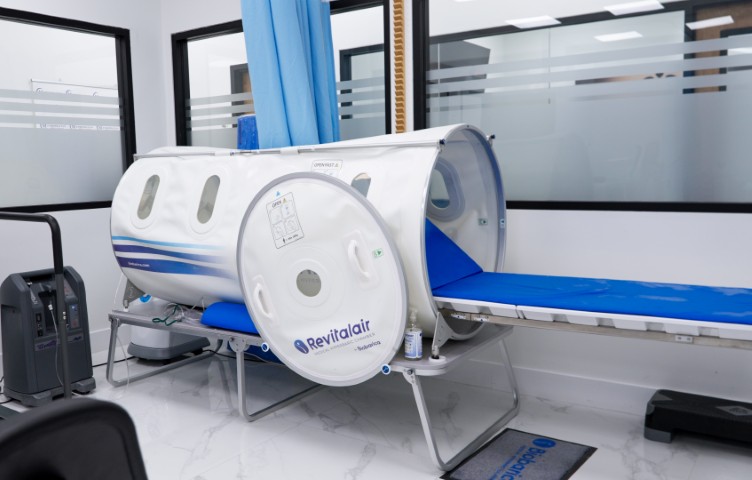
Hyperbaric oxygen therapy (HBOT) for seniors in Broward County is one of the most underutilized tools in senior medicine — and one of the most effective for conditions that stop responding to standard care. If you or a loved one is managing a slow-healing wound, recovering from radiation treatment, or dealing with a chronic bone infection, HBOT may be the clinical next step your physician recommends.
At Metropolitan Medical Centers in Tamarac, FL, we offer in-house HBOT as part of a fully integrated senior care program. Your treatment can be prescribed, administered, and monitored by the same care team — in the same location — without the referral runaround that comes with standalone clinics.
This guide explains what HBOT is, which conditions it treats in older adults, how Medicare coverage works, and what your first session at our Tamarac clinic will actually look like.
What Is Hyperbaric Oxygen Therapy?
Hyperbaric oxygen therapy involves breathing 100% pure, medical-grade oxygen inside a pressurized chamber. The increased atmospheric pressure — typically 1.5 to 3 times the pressure at sea level — allows your lungs to absorb dramatically more oxygen than they normally could. That oxygen-saturated blood then circulates throughout your entire body, accelerating the natural healing process at a cellular level.
HBOT is not a new or experimental treatment. It has been used in hospital settings for decades, beginning with decompression sickness treatment in divers, and is now FDA-cleared and recognized by Medicare for more than a dozen serious medical conditions — many of which disproportionately affect adults over 65.
💡 Key fact: Under 100% oxygen at increased pressure, tissues can receive up to 10 to 15 times more oxygen than under normal conditions. This accelerated oxygenation drives HBOT's healing effects.
Conditions HBOT Treats in Seniors
For seniors in Broward County managing complex chronic conditions, HBOT can be a decisive intervention when standard treatment has plateaued. The following are among the most common and evidence-supported applications for older adults:
- Diabetic foot ulcers and non-healing lower-extremity wounds — the single most common use in seniors; Medicare has specific coverage criteria
- Radiation tissue damage (osteoradionecrosis) — bone and soft tissue injury following cancer radiation therapy
- Chronic bone infections (osteomyelitis) — when antibiotics alone are insufficient
- Compromised skin grafts and surgical flaps — HBOT improves graft survival rates
- Severe anemia — when transfusion is not an option, HBOT can sustain tissues temporarily
- Carbon monoxide poisoning — one of the original and most established uses
- Sudden hearing or vision loss — emerging evidence supports HBOT as an adjunct treatment when initiated quickly
- Post-stroke recovery support — used in select cases to support neurological healing
- Chronic fatigue and fibromyalgia — growing body of research, particularly in senior populations
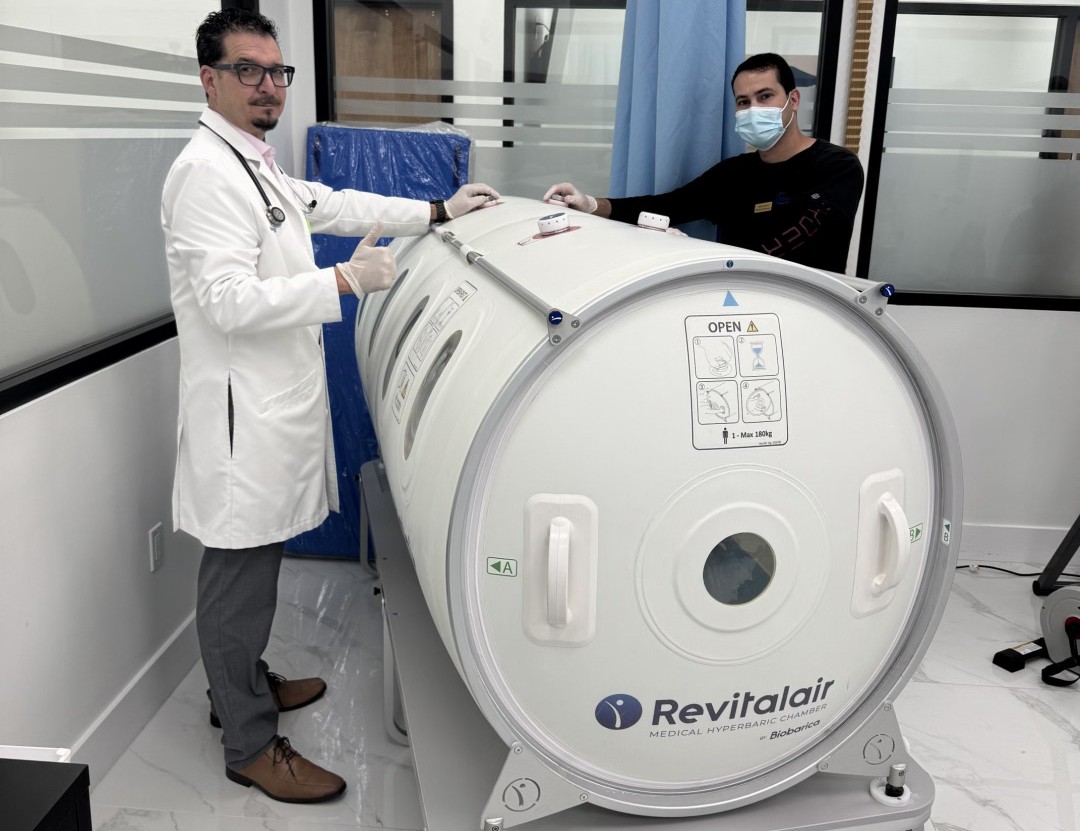
How a Hyperbaric Oxygen Therapy Session Works — Step by Step
First-time patients often have questions about what HBOT actually feels like. Here is what to expect from a standard session at Metropolitan Medical Centers:
- You arrive and change into a cotton gown provided by our staff. Metal objects, petroleum-based products, and certain materials must be removed before entering the chamber.
- You enter the hyperbaric chamber — a clear, enclosed cylinder. Monoplace chambers hold one person and allow you to remain comfortable throughout.
- The chamber is sealed and pressure is gradually increased. During this phase, you may feel fullness in your ears — similar to the descent on an airplane. Our staff will teach you an easy equalization technique beforehand.
- Once the target pressure is reached, you breathe 100% oxygen through a soft mask or hood. Many patients watch television, listen to music, or simply rest.
- Sessions typically last 60 to 90 minutes at full pressure. You may feel a brief warmth as pressurization occurs — this is normal.
- At the end, pressure is gradually and comfortably returned to normal. You can resume all normal activities immediately — no recovery period required.
Most treatment plans for Medicare-covered conditions involve 20 to 40 sessions, typically five days per week. Your physician will prescribe the exact protocol based on your diagnosis and your body's response.
HBOT at Metropolitan Medical Centers in Tamarac — What Makes Our Approach Different
Most standalone HBOT clinics operate in isolation from your regular healthcare team. You receive the therapy, but whoever administers it may not know your full medical history, current medications, or how treatment is interacting with your overall health.
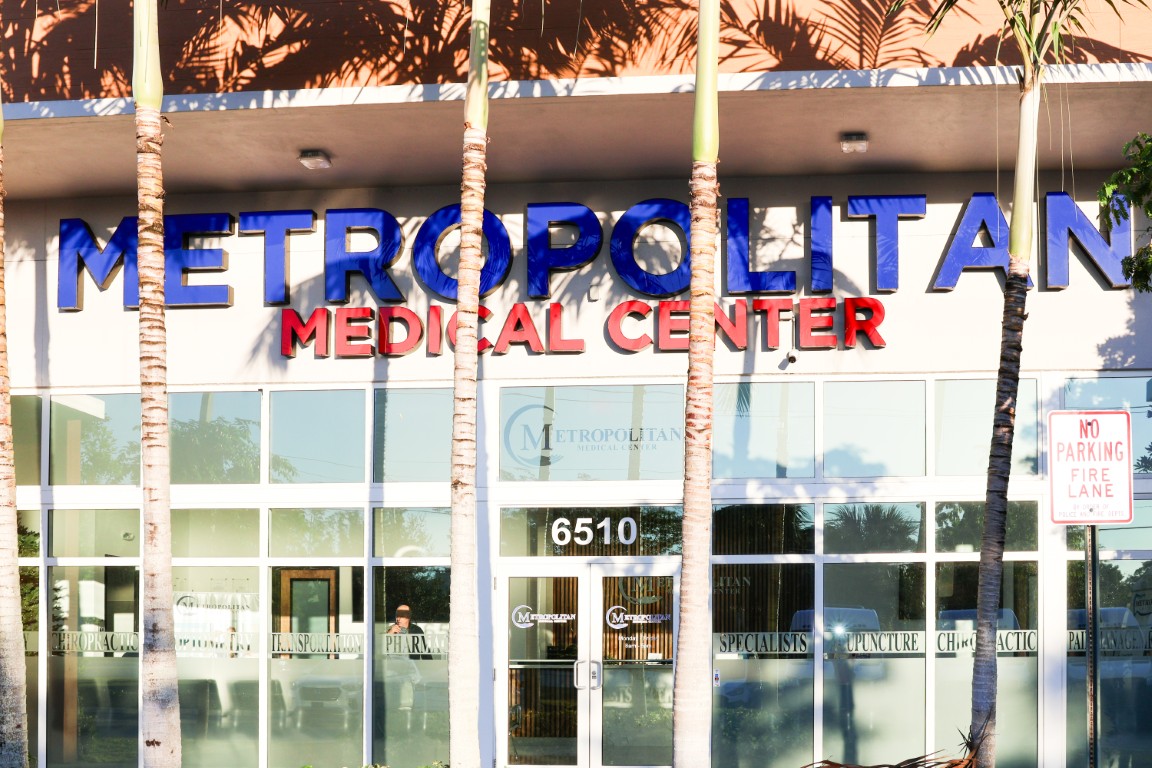
At Metropolitan Medical Centers, HBOT is integrated into your primary care. Your physician — who already knows your health history, chronic conditions, and medication list — can refer you directly, monitor your progress between sessions, and adjust your overall care plan as you respond to treatment. Everything happens at 6510 N University Dr, Tamarac, FL 33321.
Additional features that matter for seniors in Broward County:
- Bilingual care team — English and Spanish spoken throughout our clinic
- Door-to-door transportation — Complimentary transportation for patients who need it; you never have to worry about driving yourself to 30+ sessions
- On-site diagnostics and laboratory — Wound assessments, bloodwork, and imaging completed without leaving our facility
- Coordinated billing — Our team handles Medicare and insurance documentation, including the wound-care records required for coverage approval
We also offer ozone therapy and IV infusion therapy — services that can complement HBOT for seniors managing chronic inflammation, immune challenges, or fatigue.
Medicare Coverage for Hyperbaric Oxygen Therapy
Medicare Part B covers HBOT when it is physician-supervised and used for specific approved conditions. The table below outlines the primary covered indications relevant to seniors:
| Condition | Medicare Coverage Notes |
|---|---|
| Diabetic wounds of the lower extremities | Covered after 30 days of standard wound care without adequate improvement, with documented physician supervision |
| Osteoradionecrosis (radiation bone damage) | Covered when associated with prior radiation therapy for cancer |
| Chronic refractory osteomyelitis | Covered when the infection has failed to respond to standard antibiotic treatment |
| Compromised skin grafts / surgical flaps | Covered when graft or flap is at risk of failure |
| Acute carbon monoxide poisoning | Covered for emergency treatment |
| Clostridial myonecrosis (gas gangrene) | Covered as adjunct to surgical and antibiotic treatment |
Our care team handles the documentation process for Medicare coverage — including the wound measurement records and treatment response notes required for approval. We accept Medicare Advantage plans including Humana, UnitedHealthcare, Aetna/CVS, CarePlus, Cigna, and Oscar.
⚠️ Important: Coverage depends on physician supervision and proper documentation. HBOT provided in non-clinical or spa settings is typically not covered by Medicare. Ours is a fully supervised medical clinic.
Are You a Good Candidate for HBOT?
You may be a strong candidate for hyperbaric oxygen therapy if you have one or more of the following:
- A wound that has not healed in 30 or more days despite standard care
- A history of diabetes with lower-extremity complications
- Received radiation therapy for cancer and are experiencing tissue or bone damage at the radiation site
- A chronic bone infection that has not fully resolved with antibiotics
- Experienced sudden vision or hearing loss in the past 2 to 4 weeks
- Are recovering from a skin graft or reconstructive procedure
HBOT is not appropriate for everyone. Patients with certain untreated lung conditions, a history of spontaneous pneumothorax, or active claustrophobia may need evaluation or modified protocols. Our primary care physicians conduct a thorough pre-treatment evaluation — including a full medication review — before recommending HBOT.
The safest way to determine candidacy is a physician consultation at our Tamarac clinic. Call (954) 417-4499 to schedule your evaluation. We serve patients from Tamarac, Coral Springs, Coconut Creek, Fort Lauderdale, Lauderhill, Plantation, and across Broward County.