

Summer heat safety for seniors in Broward County is not a seasonal suggestion — it is a clinical priority. By May, South Florida's temperatures and humidity levels have already climbed to ranges that are genuinely dangerous for older adults. Seniors managing heart disease, diabetes, kidney conditions, or taking daily medications face the highest risk, and heat-related illness kills hundreds of Florida residents every year, the majority of them over the age of 65.
This guide from the care team at Metropolitan Medical Centers in Tamarac, FL covers why older adults are more vulnerable, how to recognize warning signs before they become emergencies, eight proven prevention strategies built for South Florida summers, and when IV hydration therapy is the right clinical response — not just more water.
Why South Florida Seniors Face Greater Heat Risk Than Younger Adults
Aging changes the body's ability to handle heat in several important ways. Understanding these mechanisms explains why the same 95°F day that a 40-year-old handles easily can become a medical emergency for a senior neighbor:
- Reduced thirst response — Older adults are significantly less likely to feel thirsty even when clinically dehydrated. By the time you feel thirsty, you may already be behind on fluids.
- Diminished sweating capacity — The body's primary cooling mechanism weakens with age, reducing the ability to dissipate heat efficiently.
- Cardiovascular limitations — The heart must work harder to pump blood to the skin for cooling. For seniors with heart disease or hypertension, this added strain matters.
- Medication interactions — Diuretics, beta-blockers, antihistamines, and antidepressants all impair the body's heat response. If you take any of these, your summer heat risk is meaningfully higher.
- Kidney function changes — Reduced kidney efficiency means the body is less effective at retaining fluids and balancing electrolytes under heat stress.
- Reduced ability to sense temperature changes — Some seniors, particularly those with diabetes or neuropathy, have a diminished ability to notice when their body temperature is rising.
In Broward County, where heat indices regularly exceed 105°F from June through September and humidity keeps nighttime temperatures well above 80°F, these factors compound every single day.
Warning Signs of Heat-Related Illness: Know All Three Levels
Heat illness progresses through three levels of severity. Recognizing each stage — and knowing when to call 911 versus when to call your doctor — can be the difference between a clinic visit and an emergency room.
Heat Cramps
- Muscle spasms in legs or abdomen
- Heavy sweating
- Normal body temperature
- Action: Rest in a cool area, drink electrolyte fluids
Heat Exhaustion
- Heavy sweating or cold, clammy skin
- Rapid, weak pulse
- Nausea or vomiting
- Dizziness, weakness, fainting
- Body temp up to 104°F
- Action: Cool environment + call (954) 417-4499
Heat Stroke
- Body temp above 104°F
- Hot, red, dry or moist skin
- Rapid, strong pulse
- Confusion or altered mental status
- Loss of consciousness
- Action: Call 911. Apply ice packs to neck, armpits, groin.
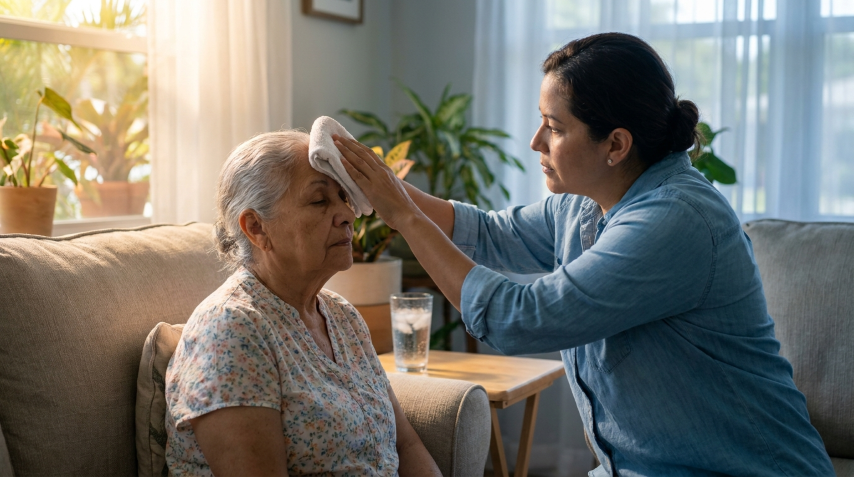
🚨 Heat stroke is a life-threatening emergency. If a senior shows a body temperature above 104°F, confusion, or loss of consciousness — call 911 immediately. Move them to a cool environment and apply cold wet cloths to the neck, armpits, and groin while waiting for help. Do not drive them to a clinic.
8 Summer Heat Safety Strategies for Seniors in Broward County
-
Hydrate proactively — before you feel thirsty Drink 8 to 10 cups of fluid daily, starting in the morning. Set hourly reminders if needed. Plain water is essential; electrolyte-enhanced drinks help on extremely hot days.
-
Avoid outdoor activity during peak heat hours Stay indoors between 10 AM and 4 PM on hot days in Broward County. If you must go out for errands or appointments, go before 9 AM or after 5 PM.
-
Wear the right clothing Light, loose-fitting, light-colored natural fabrics like linen and cotton reflect heat and allow air circulation. A wide-brimmed hat significantly reduces heat absorption when outdoors.
-
Keep your home cool Set your air conditioning to 78°F or below. If you don't have AC, identify cool public spaces — libraries, shopping centers, and senior centers — and spend time there on extreme heat days. Call 211 for Broward County cooling center locations.
-
Limit alcohol and caffeine Both are diuretics that accelerate fluid loss. If you enjoy coffee or tea, balance each cup with an equal amount of water throughout the day.
-
Review your medications with your doctor Ask your primary care physician which of your current medications affect heat tolerance or increase dehydration risk. Never stop a medication on your own — but knowing your risk lets you take extra precautions.
-
Never sit in a parked car — even briefly Car interiors heat to dangerous temperatures within five to ten minutes in South Florida sun, at any time of day, including early morning.
-
Check on isolated neighbors daily Seniors who live alone face the highest heat mortality risk. A daily phone call or brief visit from a neighbor or family member is a proven, life-saving measure during heat advisories.
When Water Alone Is Not Enough: The Case for IV Hydration Therapy
Drinking fluids is the essential first line of defense. But for many seniors — particularly during South Florida's most intense heat weeks — oral hydration cannot always keep pace with what the body needs. Common situations where drinking more water falls short:
- Nausea or vomiting that prevents keeping fluids down
- Gastrointestinal conditions that reduce fluid and electrolyte absorption
- Medications that cause rapid fluid loss faster than oral intake can replace
- Advanced dehydration that requires rapid, direct correction
- Electrolyte imbalances — low sodium or low potassium — that plain water cannot fix and that are dangerous for seniors with heart conditions
- Chronic conditions like kidney disease or heart failure that complicate fluid management
IV hydration therapy delivers a precisely calibrated solution of fluids, electrolytes, and when indicated, vitamins directly into the bloodstream — bypassing the digestive system entirely. The result is immediate, complete absorption that no oral approach can match.

IV Hydration Therapy at Metropolitan Medical Centers in Tamarac
Not all IV therapy is the same. Wellness spas and commercial drip bars have made IV therapy more visible, but they operate without the physician oversight, medication review, and clinical monitoring that seniors require. An IV solution that is safe for a healthy 30-year-old may not be appropriate for a senior managing heart failure, kidney disease, or blood pressure medications.
At Metropolitan Medical Centers, our IV therapy is administered in a full clinical setting at 6510 N University Dr, Tamarac, FL 33321, by trained medical staff under direct physician supervision. Before any IV infusion, your physician reviews your health conditions, medications, kidney and heart function, and the specific electrolyte or hydration deficit being addressed.
- Physician-supervised protocol tailored to your specific health profile
- On-site bloodwork through our diagnostic laboratory to confirm electrolyte levels before infusion
- Bilingual staff — English and Spanish — for complete comfort throughout your visit
- Complimentary door-to-door transportation — no need to drive yourself in summer heat
- Seamless coordination with your primary care and ongoing treatment plans
- Accepts Medicare Advantage: Humana, UnitedHealthcare, Aetna/CVS, CarePlus, Cigna, Oscar
Many of our Broward County patients use IV hydration preventively — scheduling sessions during periods of extreme heat before dehydration becomes a clinical emergency. Ask your physician at your next visit whether a seasonal hydration plan is right for your health profile.
💤 Our transportation service matters here: Exposure to summer heat on the way to your appointment is itself a risk. Our complimentary door-to-door transportation ensures that getting to your IV therapy session is never a barrier to care.
When to Call Your Doctor — and When to Call 911
Call Metropolitan Medical Centers at (954) 417-4499 if:
- You or a loved one has had diarrhea or vomiting for more than 24 hours during a heat event
- Urine is dark yellow, amber, or there has been no urination in 8 or more hours
- Dizziness, weakness, or near-fainting occurred after time outdoors
- A caregiver notices unusual fatigue, confusion, or behavioral changes after heat exposure
- You are unsure whether your medications are safe during an extreme heat advisory
Call 911 immediately if:
- Body temperature is above 104°F
- The person is confused, disoriented, or not responding normally
- There is any loss of consciousness
- Skin is hot and red but there is no sweating — a hallmark of heat stroke, not exhaustion
Our social services team can also connect patients and families across Broward County with local cooling center resources, emergency transportation assistance, and community support programs during heat advisories. You do not have to navigate this alone.