For seniors in Broward County, a single fall can change everything. According to the Centers for Disease Control and Prevention, one in four adults aged 65 and older falls every year, and falls remain the leading cause of injury-related deaths for this age group. The good news? Most falls are preventable. Effective fall prevention for seniors starts with understanding your personal risk factors and making small, consistent changes at home and in your medical care.
This guide from the care team at Metropolitan Medical Centers in Tamarac, FL walks through why South Florida seniors are at higher risk, how to recognize your personal fall-risk level, nine proven prevention strategies, and when a comprehensive fall risk assessment with your primary care physician is the right next step.
Why Broward County Seniors Face Higher Fall Risk Than Most Americans
South Florida homes present a unique combination of fall risks. Glossy tile floors, sliding glass doors with raised tracks, pool decks, screened-in lanais, and outdoor patios that stay wet from humidity and afternoon storms all add up. Combine that environment with the natural changes that come with aging — weaker leg muscles, slower reaction time, and gradual changes in vision and balance — and a routine trip to the kitchen can turn into an emergency room visit.
- Tile and terrazzo floors are common across Broward County and become especially slick when wet from condensation or tracked-in rain.
- Sudden afternoon storms mean wet patios, slippery driveways, and standing water around mailboxes and parking lots.
- Heat and dehydration can cause dizziness on standing — particularly for seniors on blood pressure or diuretic medications.
- Pool decks and water features common in Florida condo communities are fall hotspots, even for residents who don't swim.
- Step-down living rooms and Florida rooms with single unmarked steps cause more falls than full staircases.
Recovery from a senior fall is rarely quick. A fractured hip, wrist, or shoulder can lead to weeks of immobility, loss of independence, and in some cases a permanent move to assisted living. Investing time in prevention now protects years of mobility, confidence, and quality of life later.
Know Your Fall Risk Level: Three Categories to Recognize
Fall risk is not a yes-or-no question — it exists on a spectrum. The CDC's STEADI screening framework divides risk into three categories, each with its own recommended next step.
Stable & Confident
- No falls in the past 12 months
- Walks confidently without holding furniture
- No dizziness on standing
- Can rise from chair without using arms
- Action: Annual screening at your wellness visit
Early Warning Signs
- One fall in the past year (no major injury)
- Occasionally feels unsteady
- Some fear of falling
- Uses furniture or walls for support
- Mild dizziness on standing up
- Action: Comprehensive assessment within 60 days
Active Fall Risk
- Two or more falls in the past year
- Any fall that caused an injury
- Cannot stand from a chair without using arms
- Frequent dizziness or near-fainting
- Has stopped activities out of fear
- Action: Call (954) 417-4499 to schedule promptly
⚠ If a fall has already happened — especially with head impact, loss of consciousness, severe pain, or inability to stand — call 911 immediately. Do not try to drive the person to a clinic. Hip and spine injuries can become catastrophic with unsupported movement.
9 Proven Fall Prevention Strategies for Seniors
-
Schedule a comprehensive fall risk assessment The single most effective step is asking your primary care physician for a fall risk evaluation. This screening reviews balance, gait, strength, vision, medications, and your home environment. A yearly annual health check-up is the ideal time to request it.
-
Improve lighting throughout your home Walk through your home after sunset. Install motion-sensor night lights in hallways and bathrooms, brighter LED bulbs in every room, light switches at the top and bottom of staircases, and a bedside lamp within easy reach.
-
Remove tripping hazards in high-traffic areas Clear floors of throw rugs, electrical cords, magazine stacks, pet bowls, and low-profile furniture. Secure necessary rugs with non-slip backing or double-sided carpet tape. Never store items on stairs — even temporarily.
-
Install grab bars and non-slip surfaces in the bathroom The bathroom is the highest-risk room in any senior's home. Install professionally-mounted grab bars inside the shower, beside the toilet, and near the tub. Add non-slip mats inside the shower and a textured rug on the floor outside it.
-
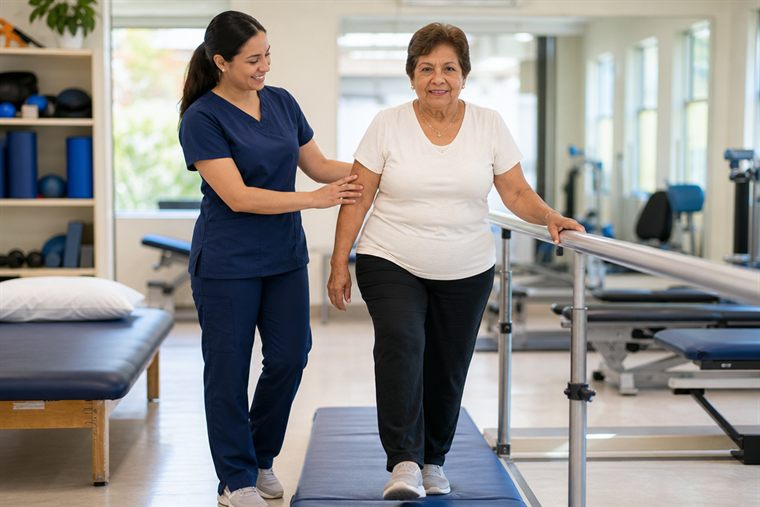
Build strength and balance with regular exercise Muscle weakness is one of the strongest predictors of falling — and it responds to training even after age 70. Tai chi can reduce fall risk by up to 50%. Water aerobics, guided physical therapy, and daily walking all help. Our PT team can design a program at your current ability level.
-
Keep vision and hearing sharp You can't avoid what you can't see or hear. Schedule a comprehensive eye exam every year. Our guide on senior vision care in Broward County covers age-related conditions. Untreated hearing loss is linked to a tripled fall risk — the inner ear is central to balance.
-
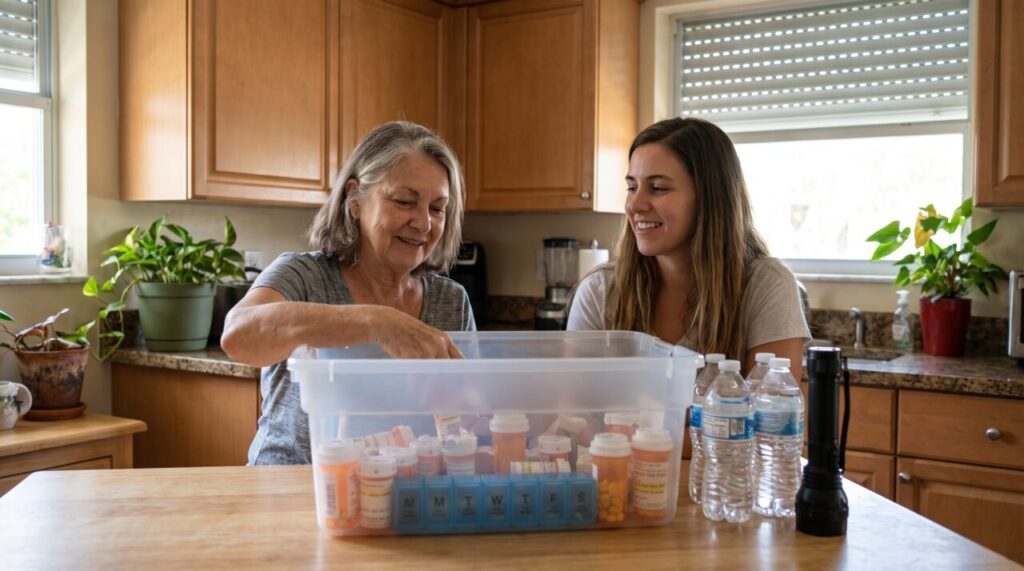
Review your medications regularly Sleep aids, blood pressure medications, antidepressants, opioid pain relievers, and some OTC allergy drugs can affect balance. Bring every prescription, supplement, and OTC bottle to your next primary care visit so we can flag interactions and suggest safer alternatives.
-
Manage chronic conditions that quietly increase fall risk Several conditions raise fall risk when not well controlled: diabetes (neuropathy reduces foot sensation), high blood pressure (sudden drops cause dizzy spells), arthritis, and stroke recovery. Coordinated care keeps these from becoming fall triggers.
-
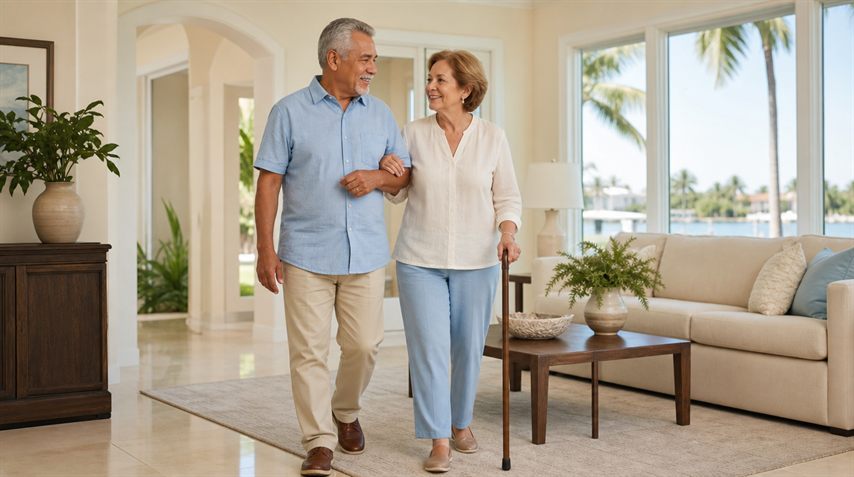
Use assistive devices properly A cane, walker, or rollator isn't a sign of giving up — it's a tool that lets you keep moving safely. An improperly fitted device can actually raise your fall risk. A physical therapist will size your cane or walker to your wrist height and teach you the correct walking pattern. Consider a personal emergency response system if you live alone.
The Bathroom: The Highest-Risk Room in Your Home
Of all the rooms in a typical Broward County home, the bathroom causes the most injury-related senior falls. Wet tile, low toilets, the close confines of a tub or shower stall, and the need to twist or step over edges combine to make it especially hazardous. A few targeted modifications can change that:
- Grab bars mounted professionally into wall studs (not just suction-cup bars) inside the shower, beside the toilet, and near the tub.
- A shower chair or transfer bench so you can sit while bathing rather than standing on a wet surface.
- A raised toilet seat with side handles — one of the most underrated, inexpensive safety upgrades.
- Non-slip mats inside the shower or tub and a textured floor mat outside.
- A handheld showerhead so you can rinse while seated.
- Bright, even lighting — including a nightlight for middle-of-the-night trips.
💡 Tip: Most professional grab-bar installations cost less than a single emergency room copay. Our social services team can connect Broward County patients with vetted local installers and, in some cases, financial assistance programs.
Comprehensive Fall Risk Assessment at Metropolitan Medical Centers
At Metropolitan Medical Centers in Tamarac, your fall risk assessment isn't a single checkbox — it's a coordinated evaluation that pulls together primary care, physical therapy, vision care, pharmacy, and social services to give you a complete, personalized prevention plan. Most patients leave with a clear plan in hand within a single visit.

Your assessment includes:
- STEADI-based balance and gait screening administered by your primary care physician
- Comprehensive medication review — we look at every prescription, supplement, and OTC drug for fall-risk interactions
- On-site vision check and referral if your prescription is out of date or a cataract is suspected
- Strength testing and physical therapy plan tailored to your current ability level
- Home safety questionnaire with personalized modification recommendations
- Bilingual staff — English and Spanish — for complete comfort throughout your visit
- Complimentary door-to-door transportation so getting to your visit is never the obstacle
- Accepts Medicare Advantage: Humana, UnitedHealthcare, Aetna/CVS, CarePlus, Cigna, Oscar
💤 One visit, one team, one plan: Because primary care, PT, vision, pharmacy, and social services are all under one roof at our Tamarac location, you don't have to coordinate referrals across three or four different offices. Your prevention plan is built in one place.
When to Call Your Doctor — and When to Call 911
Call Metropolitan Medical Centers at (954) 417-4499 if:
- You or a loved one has had any fall in the past six months — even one without obvious injury
- You feel dizzy or lightheaded when standing up from a chair or bed
- You grip furniture or walls for support when walking through your home
- You're afraid of falling and have stopped activities you used to enjoy
- You've noticed new weakness, numbness, or joint pain
- A caregiver has noticed unusual unsteadiness, confusion, or balance changes
Call 911 immediately after a fall if:
- The person hit their head or there is any sign of head injury
- There is any loss of consciousness, confusion, or disorientation
- The person cannot stand or bear weight on a leg
- There is severe pain in the hip, back, or any joint
- The person is on blood thinners (bruising and internal bleeding risk rise sharply)
- You see a visible bone deformity or open wound
Don't wait for a serious injury before getting a fall risk evaluation. Our care team is ready to help — and complimentary transportation is available so distance and summer heat are never barriers to getting in.
Frequently Asked Questions About Senior Fall Prevention
Protect Your Independence. Schedule a Fall Risk Assessment Today.
Metropolitan Medical Centers in Tamarac offers comprehensive fall risk assessments, physical therapy, vision care, and medication reviews — all under one roof. Our bilingual team is ready to build a personalized prevention plan that keeps you safe and confident at home.
Call (954) 417-4499 Send us a message at metropolitanmedicalcenters.com/contact-us/6510 N University Dr · Tamarac, FL 33321 · Mon–Fri 8 AM–5 PM · Sat 8 AM–12 PM
Serving Tamarac, Coral Springs, Fort Lauderdale, Coconut Creek, Lauderhill, Plantation, Margate, and all of Broward County.